Concrete Footing Installation in Goodyear, AZ — Strength, Privacy, and Lasting Value
Engineered monolithic concrete footings designed for heavy block walls, retaining structures, and commercial enclosures.
Pricing Provided by Block Guys LLC
Concrete Footing Installation Built to Hold Goodyear Walls
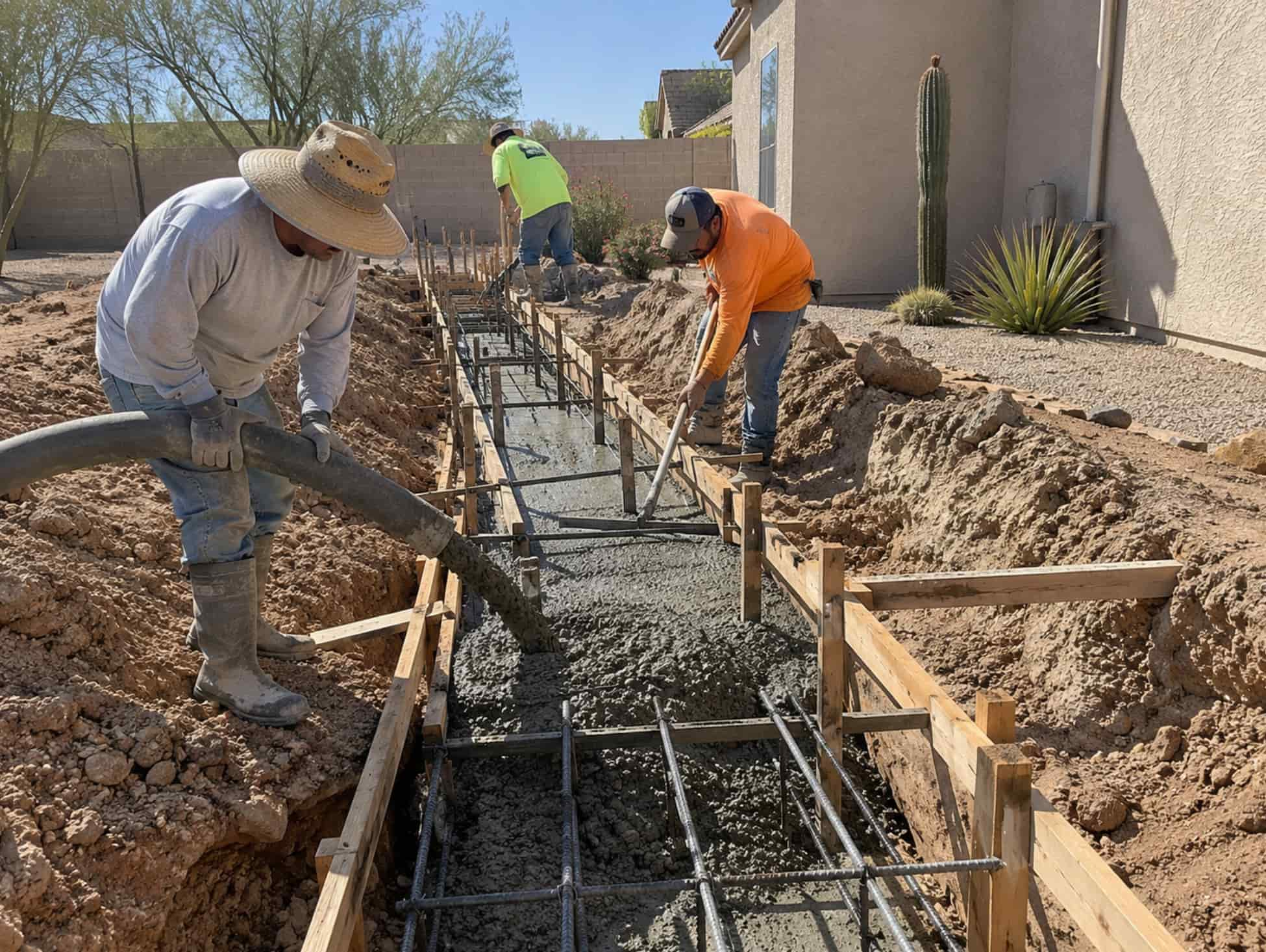
A wall is only as strong as the footing under it. Our concrete footing installation in Goodyear, AZ pours reinforced, code-compliant footings for block walls, retaining walls, columns, and masonry structures — excavated past the caliche, tied with Grade-60 rebar, and inspected before any block is laid. It's the hidden work that keeps a wall standing plumb and crack-free through Arizona's soil movement, monsoon storms, and decades of heat.
What is a Concrete Footing, and Why Does it Matter in Goodyear?
A concrete footing is the reinforced concrete foundation that a masonry wall, column, or retaining structure is built on. It spreads the wall's weight across the soil and resists the lateral forces — wind, soil pressure, vehicles — that try to push the wall over. In Goodyear, where caliche, expansive clay, and monsoon runoff all stress a wall, a footing engineered for the local soil is what keeps it standing straight. A properly installed concrete footing delivers:
What Goes Under a Wall That Has to Last in Goodyear Soil
Every block wall is only as stable as the footing under it. In Goodyear, that means digging past the loose topsoil and the caliche layer into undisturbed native soil, then pouring a reinforced continuous footing. We set a Grade-60 rebar cage — typically #4 or #5 bars on 24-inch centers — tied and chaired at the correct height so the steel sits in the middle of the concrete, not against the soil where it would rust. The footing is sized to the wall height, the lateral wind load, and the soil bearing capacity, and it's inspected before any block goes up. The result is a foundation that keeps the wall plumb, level, and crack-free through monsoon storms and decades of Arizona heat.
The Difference Behind Our Concrete Footing Work
We dig to the right depth, tie the rebar correctly, and pour footings sized to the wall and the soil — not a one-size trench. The footing is inspected before any block is laid, so the wall above it is built on a foundation that's actually engineered to hold it. That's the difference between a wall that stands for decades and one that leans after the first monsoon.
Past the Caliche
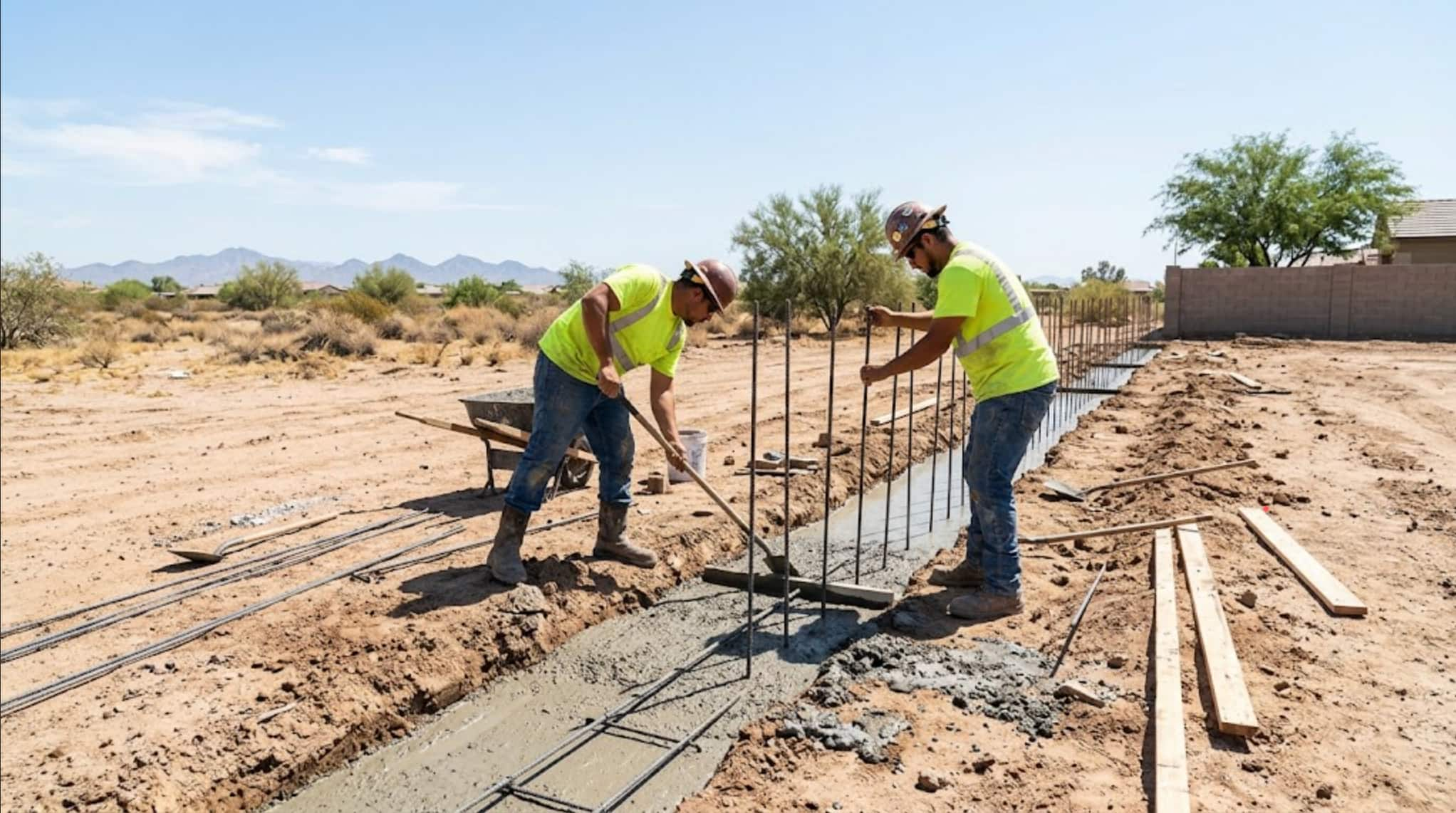
We excavate through caliche and loose topsoil to undisturbed native soil so the footing bears on solid ground.
Grade-60 Rebar
We tie and chair #4 or #5 Grade-60 rebar cages at the correct height so the steel is where it needs to be in the pour.
Load-Engineered
Footing width and depth are sized to the wall height, wind load, and the soil bearing capacity — not a guess.
Inspected First
The footing is inspected and approved before any block goes up, so the wall is built on a verified foundation.
Full Wall Scope
Footings, block, columns, and finishes all under one license — one crew, one accountable project.
Honest Pricing
Free on-site estimates with excavation, rebar, concrete, and inspection line items — pricing provided by Block Guys LLC.
See our block wall installation and retaining wall installation pages for the walls these footings support. Call Goodyear Block Wall Contractors for a free footing estimate.
Signs You Need a New or Replacement Concrete Footing
A footing problem shows up as a wall problem — leaning, cracking, or settling. Here's when a footing is the right call for a Goodyear property.
A footing is the foundation everything above it depends on. If a wall is leaning, cracking, or going in new, call for a free footing estimate.
New Wall Going Up
Any new block wall, retaining wall, or masonry column needs a footing engineered for its height and the local soil before the first block is laid.
Leaning or Settling Wall
A wall that's leaning or has dropped likely has a footing that failed or was never dug deep enough — a new engineered footing is the real fix.
Cracks at the Base
Horizontal cracks along the bottom course usually point to footing movement, not block failure. The footing has to be addressed or the crack returns.
Sloped or Hillside Lot
Sloped Goodyear lots need stepped footings keyed into native soil — the structural base that keeps retaining walls from sliding downhill.
Our Step-by-Step Concrete Footing Process
A footing that holds starts with the excavation. Our process digs, reinforces, pours, and inspects before the wall is ever built.
Excavate to Native Soil
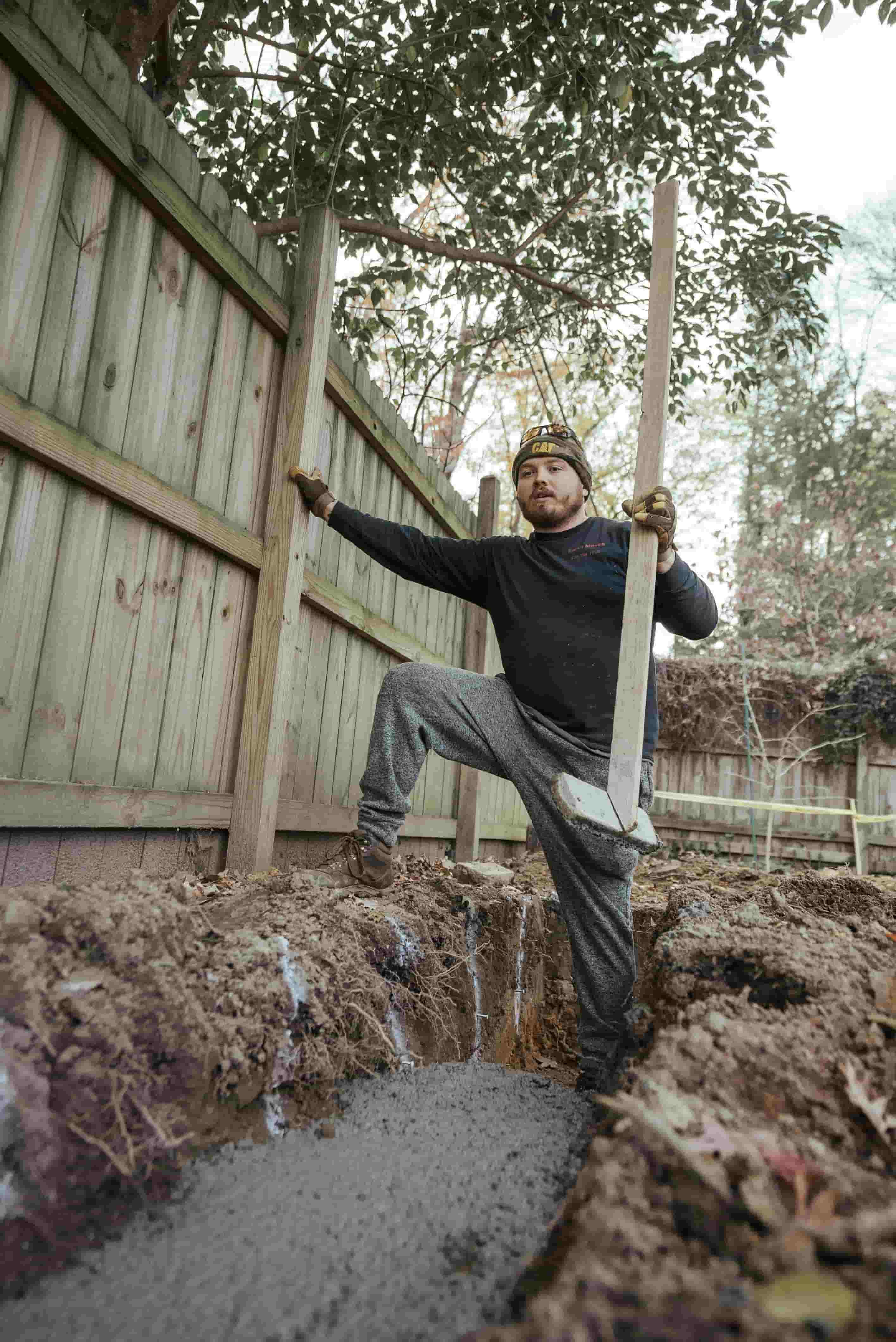
We trench past topsoil and caliche to undisturbed native soil at the depth the wall height and soil bearing require.
Rebar & Form
We tie and chair the Grade-60 rebar cage and set forms to the correct width, height, and grade for the wall above.
- #4 or #5 Grade-60 rebar
- 24" on-center
- Properly chaired height
Pour & Level
We pour concrete to the specified strength, level the top, and embed any anchor bolts or dowels the wall requires.
Inspect & Build
The footing is inspected and approved, then the block wall is built on a verified, level, load-bearing foundation.
Engineered Foundation Footings for Arizona CMU Walls & Load-Bearing Structures
A block wall or retaining structure is only as reliable as the concrete pad beneath it. Without an engineered footing placed below volatile expansive topsoil, desert soil heave will fracture blockwork within two seasons. As a dedicated concrete contractor, we construct engineered monolithic footings designed for heavy CMU fences, commercial enclosures, and hillside terracing.
Soil Bearing Capacity & Trench Dimensioning
In West Valley desert soils, we excavate trenches to precise dimensional ratios. A standard 6-foot block wall requires a minimum footing width of twice the wall thickness (16 to 24 inches wide) and 12 to 18 inches of depth. For walls holding soil surcharges or supporting heavy RV gates, footings are engineered wider with continuous keyed shear lugs to resist sliding and overturning.
Continuous Grade-60 Steel Rebar Grid Reinforcement
We never pour unreinforced 'mass' concrete. Every footing installation incorporates a continuous steel rebar cage using Grade-60 deformed steel bars tied on metal chairs to ensure minimum 3-inch concrete cover against earth. Vertical J-bend starter dowels are tied directly into the cage, positioned on exact 8-inch cell centers so block cores slip over rebar with zero bending or misalignment.
3,000+ PSI Concrete Mixes & Proper Desert Curing
High Goodyear summer temperatures can flash-dry fresh concrete, causing shrinkage cracks and lowering compressive strength. We pour commercial-grade 3,000 to 4,000 PSI ready-mix concrete with water-reducing admixtures, vibrate the pour to eliminate honeycombing, and apply hydration-preserving curing compounds so footings achieve maximum structural density.
Local Standards & Building Guidelines
Stepped Footings for Sloped Lots
Properties across Verrado and Estrella Mountain often feature severe natural grade drops. We engineer level stepped footings that transition elevation in neat 8-inch increments (matching block course heights), preventing shear slip and providing uniform support along hillsides.
Related Masonry Services
Hardscaping & Pavers
Complete master-planned hardscapes, paver surfaces, outdoor living structures, and custom stonework.
Learn moreMasonry Contractor
Full-service licensed Arizona masonry contractor (ROC #354592) for residential and commercial masonry construction.
Learn moreMasonry Repair
Precision tuckpointing, stone veneer re-anchoring, and mortar restoration for damaged masonry structures.
Learn morePaver Patio Installation
Custom interlocking paver patios designed for outdoor entertaining, dining, and barefoot desert relaxation.
Learn morePool Deck Paver Installation
Cool-touch travertine and textured paver pool decks engineered for barefoot comfort, slip resistance, and chemical durability.
Learn morePaver Driveway Installation
Heavy vehicular-rated paver driveways designed to support heavy trucks, RVs, and personal vehicles without cracking.
Learn moreServing Goodyear & Surrounding West Valley Communities
Looking for local masonry experts? Explore our dedicated service pages across Maricopa County.
Concrete Footing Installation FAQs
Ready to Start Your Concrete Footing Installation Project?
Get a free, no-obligation estimate from a licensed Arizona masonry contractor.